Friday, November 12, 2010

William Lloyd Garrison


Personal background:

· I was born on December 13, 1805

· I was born in Newburyport, Massachusetts

· I received a limited education as a child, but I increased my schooling by working for various newspapers.

· I am one of the most prominent leaders in the Abolitionist Movement of the 1800s

· I am an editor of the newspaper The Liberator, and as one of the founders of the American Anti-Slavery Society. I promoted immediate emancipation of slaves in the United States.

Issues:

· I dealt with slavery and women’s suffrage

· I fought for the abolishment of slavery and for women’s suffrage

· I believed that slavery was morally wrong; slavery is a sin, always, everywhere and only a sin

Solutions:

· In response to slavery, I went to Baltimore in 1829 to aid Benjamin Lundy in publishing the Genius of Universal Emancipation, an abolitionist newspaper. The Liberator advocated for women’s suffrage.

· I preached my principles in hope to end slavery but slavery still continued even after my efforts( although garrison didn’t directly stop slavery, his principles lead to the idea of the abolishment of slavery). With slavery increasingly important to south’s economy, southern forced opponents of slavery to flee the region. In the North, where racism was equally established, abolitionist provoked bitter resistance.

Relationship to Others:

· I would feel comfortable chatting with Mr. Frederick Douglass, since he too urged for the end of slavery.

· I would feel least comfortable interacting with Sylvester Graham given that he had no concern for women’s suffrage.

· I strongly support transcendentalism and women’s rights.


Mian


Wordle:

http://www.wordle.net/show/wrdl/2721278/Untitled

Sylvester Graham


-I was born on July 5, 1794
-I was born in West Suffield, Connecticut, United States
- I was a teacher but because of my poor health I wanted to become a minister and went to Amherst College in 1823 but by fellow students scorned my historic manner and I withdrew from college.
-I joined a crusade against drinking and joined the Pennsylvania Temperance Society. I also argued that moderation is beneficial. I believe that it is better for spiritual and physical reasons. I also created a wheat bread which I called the Graham cracker.
-I was involved in studies of the effects of alcohol and other substances on the body and with the need of personal hygiene.
-I believe that drinking is evil. Physical exercise, sensible clothing, continence, good sleeping habits, vegetarianism are some good habits I believe people should follow.
-My inspiration comes from religion. In 1829 I became a Presbyterian minister and was inspired to stop drinking.
- I believe individual moral reform provides a solution to drinking. I emphasized on a discriminatory diet which was against the heavy eating at the time. A person should control himself because it will show how strong he is morally.
-My ideas, even though they flourished, they soon faded partly because my followers split up my ideas. Also, I was unable to persuade a large enough audience on my ideas of personal hygiene.

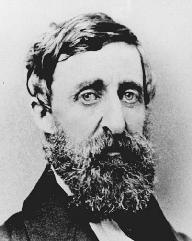
Henry Thoreau Picture

Henry David Thoreau


Henry David Thoreau


Personal Information
· I was born the 12th of July in 1817
· I was born in Concord Massachusetts
· I studied and graduated at Harvard University and Concord Academy
· I have written Walden and Civil Disobedience
· I have provided a new way of looking at life, and being able to stand back and decide what I was meant to live for.
Issues
· I was very much against slavery and having to be ruled and governed by an unjust government
· I believe that a person should stand up for what they believe in. A person should live their life the way they want it, and need not be bound by the rules of government, nor be afraid to by judged and just.
· I found my motivation by leaving to a cabin near a pond and experiencing nature firsthand, apart from the pressures of the world
Solutions
· I am able to say that my solution for slavery and an unjust government is to be just. As I once said, “Under a government that prisons any unjustly, the true place for a just man is also prison.”


Wordle
http://www.wordle.net/show/wrdl/2717529/Henry_Thoreau


Henry Thoreau

Biography

  • I was born on July 12, 1817 in Concord Massachusetts.

  • I attended Concord Academy then entered Harvard in 1833 as a scholarship student, graduating in 1837.

  • I was a significant transcendentalist writer, but my brilliance was largely omitted until later years.

  • I contributed to Martin Luther's protest ideology in American history and to Gandhi in Indian History.

  • Find and include a picture of the person you are researching.


Issues

  • I was involved in the issue of slavery and personal improvement.

  • My stance on slavery is that it is repulsive and that people should strive to improve themselves.

  • My motivation is my transcendentalist philosophy, which makes me strive to follow my values above all else.


Solutions

  • My solution to slavery is that people are to improve themselves and convince others individually to oppose slavery.

  • My person was did not make much of an impact and unsuccessful.


Relationship to others

  • My best friend is Ralph Waldo Emerson, while I dislike Jackson's policies.

  • I support temperance because clean was is so much better than alcohol.

  • Abolition is a worthy cause worth supporting.

  • I do not affiliate myself with any side regarding education, though I have been a teacher, or prison, though I have gone to jail.

  • I believe that living alone is a utopian way of life.

  • I strongly support transcendentalism and following higher values.


Wordle for "Civil Disobedience"
                 title="Wordle: Civil Disobedience">         src="http://www.wordle.net/thumb/wrdl/2718190/Civil_Disobedience"
alt="Wordle: Civil Disobedience"
style="padding:4px;border:1px solid #ddd">

Galusza

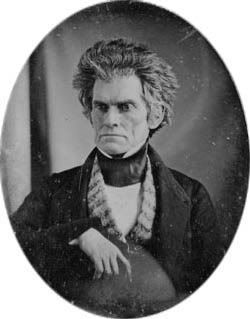
John C. Calhoun

Personal Background
-I was born March 18, 1782- March 31, 1850
-Abbeville, South Carolina
- I received little formal education early in life, but was able to graduate with honors from Yale, in 1804
- I was elected to the House of Rep. in 1810 and served in the executive branch
- I left Congress in 1817 to serve secretary of war under James Monroe.
- In the Election of 1824 I was elected vice President under John Quincy Adams
- I served briefly in the state assembly, but was elected to Congress where I quickly aligned himself with the War Hawks
- I was re-elected vice president in 1828 under Andrew Jackson
- My relationship with Jackson has crumbled once I opposed the “Tariff of Abominations” act and then I collaborated with Henry Clay to make the “Compromise tariff of 1833”.


John C. Calhoun Pictures, Images and Photos


Issues
- Issues that I have dealt with are those of slavery and Jackson’s spoil system
- I sided with John Tyler in the opposition of the central bank
- I opposed the “Tariff of Abominations” in order to support nullification
- My motivation was that I am a supporter of state rights and I believe that states have the option to disagree with the federal government and let the voice of the states be heard

Solutions
- I sided with John Tyler to have help in the opposition of the central bank
- I collaborated with my rival, Henry Clay in order to come to a compromise to the issue of the “Tariff of Abominations”
- In my road to solutions, I have been quite successful. Although I took a lot of criticism for opposing the spoils system, central bank, and the tariff acts, I have came to solutions and compromises with my opponents. I have dealt with Jackson’s anger towards but I fought back by using my powers as a senator to represent my voice.

Wordle: Untitled

Mehmed Suta

Sojourner Truth


Personal Background:
• I was born in 1797
• I was born on the Colonel Johannes Hardenbergh estate in Swartekill, in Ulster County. It was a Dutch settlement in upstate New York.
• I had no education because I was born right into slavery.
• I am a former slave that escaped slavery and became an African-American abolitionist and women's rights activist.
• I went through a life-changing religious experience that inspired be to become a traveling preacher.
• I died on November 26, 1883, in Battle Creek, Michigan

Issues:
• I am an abolitionist fighting for black freedom.
• I spoke about abolition, women's rights, prison reform, and preached to the Michigan Legislature against capital punishment. Not everyone welcomed my preaching and lectures.

Solutions:
• I tried to secure land grants from the federal government to former slaves, but it ended up without success.
• I preached about my beliefs and even though not everyone acknowledged the issues, I had many friends and support from many influential people at the time.
Relationship to Others:
• I would feel most comfortable with Frederick Douglass because he believes in women’s right and abolition.
• I would feel least comfortable with Sylvester Graham seeing that he had no concern about women’s rights.
• Influential people like Amy Post, Parker Pillsbury, Frances Gage, Wendell Phillips, William Lloyd Garrison, Laura Smith Haviland, Lucretia Mott, and Susan B. Anthony supported my work.

Trusiewicz